

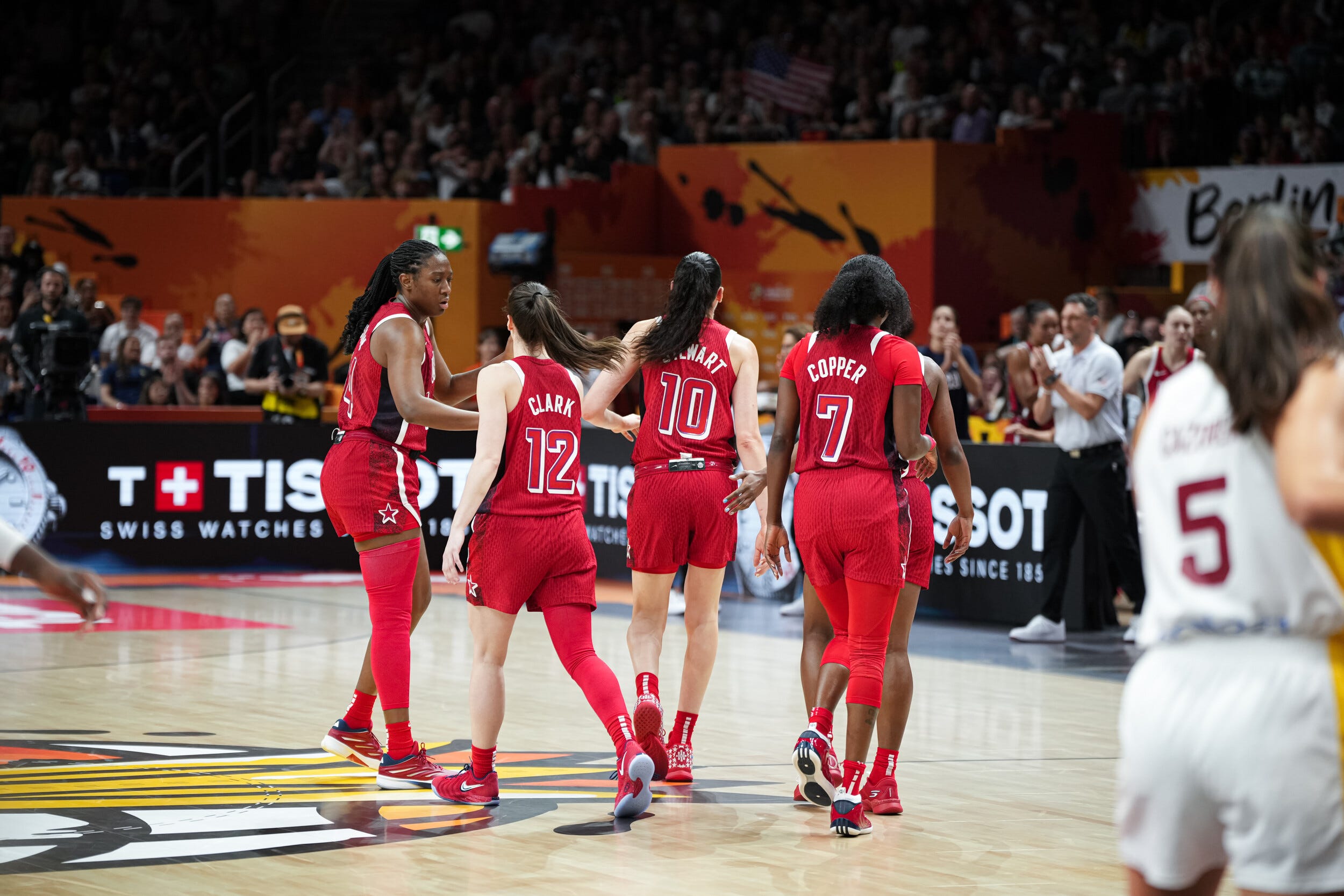
Caitlin Clark, Aliyah Boston and the U.S. women’s national team are one win away from a World Cup title.
Team USA advanced to the championship game with a 76-66 semifinal win over Spain on Saturday afternoon, surviving another uneven offensive performance and leaning on defense and free-throw shooting to get through.
Now, France is all that stands between Team USA and a fifth straight World Cup gold medal.
The championship game tips off Sunday at 2 p.m. ET (on TNT/TruTv/HBOMax) — I know, not ideal scheduling it on the first NFL Sunday of the season — after France handled Germany 86-64 in the other semifinal.
This win for Team USA wasn’t particularly pretty.
Both teams were held below 40% shooting and Team USA was just 3 for 18 (16.7%) from range despite being a collection of 12 of the best women’s players in the world. They simply haven’t shot it well from deep in this tournament.
They also recorded more turnovers (15) than assists (13), another sign of how disconnected the offense looked for long stretches. And they needed a jumpstart in both halves to get rolling.
That’s where the second unit has come in.
Following a slow start, the reserves checked in and gave Team USA a boost to close the first quarter. The surge put the Americans back on top by three, a lead they carried into halftime.
Free throws helped keep them afloat. They recorded 20 attempts before Spain even got an opportunity at the line. And by the end of the game, USA went 27 for 35 while Spain finished 10 for 11.
Breanna Stewart led the team with 16 points and six rebounds in 29 minutes, taking on a larger workload as the rotation was tweaked and tightened considerably.
That was one of the biggest differences in this game.
Through much of the tournament, first-year head coach Kara Lawson has been able to spread minutes around and use the depth of this 12-player roster. In the previous game, everyone played at least 14 minutes — and no one more than 22 minutes.
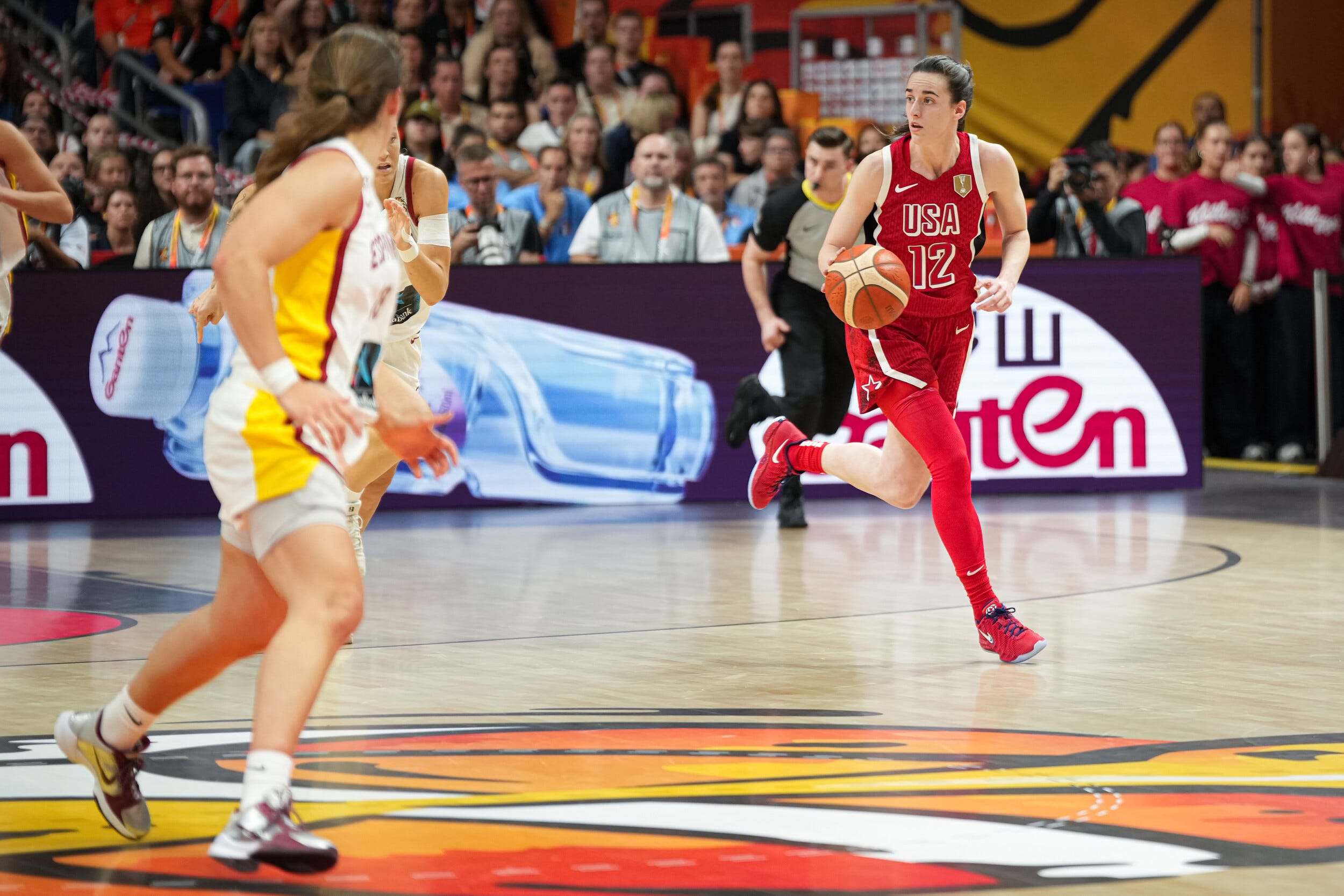
Clark, who had led Team USA in minutes in each of its previous games, was limited to 17 minutes and finished with one point and one assist.
That lone assist was indicative of how this game played out. When Clark’s assist total is high, the team’s usually is too.
Boston added six points and seven rebounds, and was trusted with important minutes late as they pulled away to close out the win.
There were several flashes of what Team USA can be offensively. But the ball movement and offensive execution seen in previous games was not there, and the reality of this group being together for less than two weeks was obvious.
Every one of these players is used to being the best player on their team, the one counted on regularly. Part of what makes these tournaments fun is seeing the collection of talent come together and combine what makes them great.
Team USA can overwhelm teams with talent and depth, but the offense has at times lacked rhythm and cohesion.
Against Italy, that nearly cost them. Against Spain, they did enough to survive again.
In this case, it was the defense and activity level — mostly from the second unit — that helped change the game. They strung together stops during a few critical stretches, especially late in the first quarter and again in the fourth.
The third quarter was a wasted one, full of opportunities that were not capitalized on.
Spain, which finished 6 for 26 from range, opened the second half with a barrage of 3s. Team USA turned it over six times in the quarter and was outscored 22-19, erasing the small cushion it had built.
So it was fitting that the scored was tied entering the final quarter.
The U.S. team opened the period on a 12-2 run and scored 18 points while holding Spain just eight on 3-of-13 shooting, creating the separation needed for a double-digit win.
The Americans can learn and move on from Saturday’s win — and they have to quickly.
Oddly, the title game is on the second day of a back-to-back for both teams, but they’re right where they want to be. This group will now face their toughest challenge yet. It’s a new experience for nine players on this 12-player roster.
But one thing they all have in common: they’re winners.
That’s how they got to this level and earned a coveted spot on this team.